

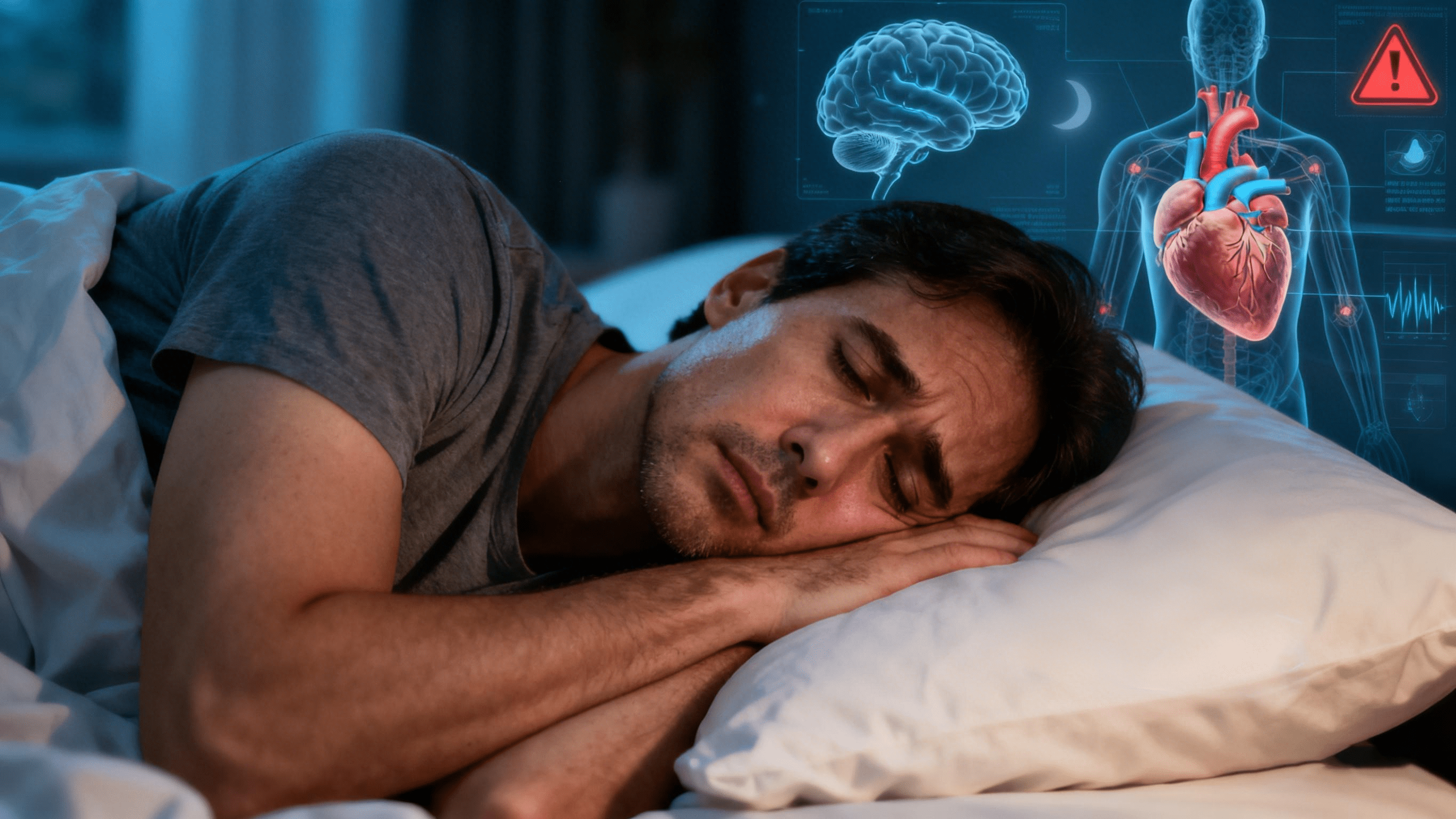
Sie wachen trotz einer erholsamen Nacht völlig erschöpft auf. Ihr Partner beschwert sich über Ihr lautes, störendes Schnarchen, unterbrochen von beängstigenden Atemaussetzern. Möglicherweise leiden Sie unter Tagesmüdigkeit, morgendlichen Kopfschmerzen oder Konzentrationsschwierigkeiten.
Dies sind die klassischen Anzeichen einer Schlafapnoe, einer häufigen, aber ernstzunehmenden Schlafstörung. Viele Menschen tun sie als bloßen „schlechten Schlaf“ ab. Doch wenn Sie jemals nachts wach gelegen und Ihre Atmung ausgesetzt haben, mag Ihnen eine beängstigende Frage in den Sinn kommen: Kann Schlafapnoe tödlich sein?
Die kurze und direkte Antwort lautet: Ja, unbehandelte Schlafapnoe kann tödlich sein.
Allerdings verläuft es meist nicht so dramatisch wie ein einmaliger Atemstillstand mit anschließendem Tod im Schlaf (obwohl dies selten vorkommt). Die eigentliche Gefahr liegt in der schleichenden, unerbittlichen Belastung des gesamten Körpers, die das Risiko lebensbedrohlicher Erkrankungen drastisch erhöht.
Lassen Sie uns genauer betrachten, wie Schlafapnoe zum Tode führen kann.

Die Mechanik des Problems
Schlafapnoe, insbesondere obstruktive Schlafapnoe (OSA), tritt auf, wenn sich die Rachenmuskulatur im Schlaf entspannt und die Atemwege blockiert. Dies führt zu Atemaussetzern von 10 Sekunden oder länger, manchmal hunderte Male pro Nacht.
Jedes Mal, wenn Sie mit dem Atmen aufhören, sinkt Ihr Sauerstoffgehalt rapide. Ihr Gehirn reagiert panisch und weckt Sie so weit auf, dass Sie nach Luft schnappen. Dieser Kreislauf aus Atemnot und Aufwachen verhindert, dass Sie die tiefen, erholsamen Schlafphasen erreichen, doch die Folgen reichen weit über bloße Müdigkeit hinaus.
In unserer modernen Welt kann Technologie erste Hinweise liefern. Wearables wie der Wrongduck Smart Ring analysieren Ihre Schlafmuster und erfassen Blutsauerstoffsättigung, Herzfrequenz und Bewegungen während der Nacht. Diese Daten ersetzen zwar keine ärztliche Diagnose, sind aber ein wertvolles Hilfsmittel, um besorgniserregende Trends zu erkennen und zu wissen, wann professionelle Hilfe ratsam ist.
Wie Schlafapnoe zum Killer wird: Die Kettenreaktion
Der ständige „Stresstest“ durch wiederholte Atemaussetzer löst eine Kaskade von Ereignissen aus, die zu tödlichen Folgen führen können.
1. Herz-Kreislauf-Katastrophe
Dies ist das größte und am besten dokumentierte Risiko. Der ständige Sauerstoffabfall und die Ausschüttung von Stresshormonen (wie Adrenalin) belasten das Herz-Kreislauf-System enorm.
-
Bluthochdruck und Herzbelastung: Ihr Herz muss härter arbeiten, um sauerstoffreiches Blut zu pumpen, was zu Bluthochdruck führt.
-
Herzinfarkt und Schlaganfall: Schlafapnoe ist ein bedeutender, unabhängiger Risikofaktor für beide Erkrankungen. Stress und Entzündungen können die Blutgefäße schädigen, das Risiko von Blutgerinnseln erhöhen und zu Ablagerungen in den Arterien führen.
-
Herzinsuffizienz: Mit der Zeit kann die ständige Belastung den Herzmuskel schwächen, sodass er nicht mehr in der Lage ist, effektiv Blut zu pumpen.
2. Tödliche Unfälle
Übermäßige Tagesschläfrigkeit ist ein typisches Merkmal der Schlafapnoe. Dabei geht es nicht nur um Müdigkeit, sondern auch um eine eingeschränkte Leistungsfähigkeit.
-
Sekundenschlaf am Steuer: Das Unfallrisiko ist für Menschen mit unbehandelter Schlafapnoe zwei- bis dreimal höher . Dieser kurze Schlaf am Steuer kann für Sie, Ihre Mitfahrer und andere Verkehrsteilnehmer tödlich sein.
-
Arbeitsunfälle: Für diejenigen, die Maschinen bedienen oder sicherheitsrelevante Berufe ausüben, kann ein Moment der Unaufmerksamkeit verheerende Folgen haben.
3. Die „perfekte Konstellation“ für den plötzlichen Herztod
Studien haben gezeigt, dass Menschen mit schwerer, unbehandelter Schlafapnoe ein erhöhtes Risiko für plötzlichen Herztod haben, insbesondere nachts. Der niedrige Sauerstoffgehalt im Blut und die zusätzliche Belastung des Herzens während dieser Atemaussetzer können zu lebensbedrohlichen Herzrhythmusstörungen führen.
Die gute Nachricht: Es ist behandelbar und gut zu handhaben.
Die Risiken sind zwar gravierend, aber die wichtigste Erkenntnis ist: Schlafapnoe ist sehr gut behandelbar. Eine Diagnose ist kein Todesurteil, sondern ein Weckruf, die eigene Gesundheit selbst in die Hand zu nehmen.
Die Standardtherapie ist die Überdruckbeatmung (PAP-Therapie) , üblicherweise mit einem CPAP-Gerät (kontinuierlicher positiver Atemwegsdruck). Dieses Gerät leitet einen sanften Luftstrom durch eine Maske und hält so die Atemwege im Schlaf offen.
Eine wirksame Behandlung mit CPAP oder anderen Alternativen (wie z. B. Zahnschienen oder Änderungen des Lebensstils) kann Folgendes bewirken:
-
Apnoe-Episoden beseitigen.
-
Normale Sauerstoffwerte wiederherstellen.
-
Verringern Sie Ihr Risiko für Herzinfarkt und Schlaganfall.
-
Verbessern Sie Ihre Schlafqualität und Ihre Wachheit am Tag deutlich.
-
Rette dein Leben.

Achten Sie auf die Zeichen und handeln Sie!
Wenn Ihnen die folgenden Symptome bekannt vorkommen, ignorieren Sie sie nicht:
-
Lautes, chronisches Schnarchen
-
Ich habe während des Schlafs Atemaussetzer beobachtet.
-
Keuchende oder erstickende Geräusche in der Nacht
-
Tagesmüdigkeit und Schläfrigkeit, egal wie lange man "schläft".
-
Morgendliche Kopfschmerzen
-
Konzentrationsschwierigkeiten
Ihr nächster Schritt ist ein Gespräch mit Ihrem Arzt. Dieser kann Sie zu einer Schlafuntersuchung (Polysomnographie) überweisen, die die sicherste Methode zur Diagnose von Schlafapnoe darstellt. Hilfsmittel wie der Wrongduck Smart Ring können wertvolle erste Erkenntnisse liefern, aber eine professionelle Diagnose ist unerlässlich.
Kann Schlafapnoe also tödlich sein? Ja. Doch durch eine Diagnose und die konsequente Behandlung können Sie die Kette der Folgen durchbrechen, Ihre langfristige Gesundheit schützen und den erholsamen, sicheren Schlaf zurückgewinnen, den Sie verdienen.
Akzeptiere es nicht einfach. Geh das Problem an. Dein Leben könnte davon abhängen.
Aktie:
Keine Lust mehr auf ständige Müdigkeit? Wie ein smarter Ring meine versteckten Schlafkiller aufdeckte
Ihr umfassender Leitfaden zum besten abonnementfreien Smartring für Frauen